Au croisement de la rue du fleuve et de celle des pins, trois têtes clignotent des yeux. Papa, maman et la petite en poussette regardent une pile de petits écrans crachant MTV. Un bras pointe, un autre s'agite, les grandes personnes réagissent aux coups d'épaule de la rose californienne. Pour la promenée, mystère. C'est juste la ballade nocturne, elle ne fait qu'ingurgiter probablement.
De l'autre trottoir, chiffon en bandana, un gars pleine vingtaine demande à qui passe par dédain un petit peu de monnaie. "Do you have change, please, sir." Un mal personnel pour une pièce de société.
Il en a besoin.
Une craquelure dans le bitume relie tout ce beau monde en travers de la ligne de stop, elle a toujours était là, rien ne sert de la suivre.
Coupons quelques têtes. Alors que l'homme s'écarte, attiré par la boucherie hongroise précédente, le jeune empoigne la poussette qui est d'accord. La mère prend ses bras pour mètre de robe. Quel beau rose! Rien ne sert d'attendre le petit bonhomme vert, valdingons une roue sur le trottoir. Ah! me voilà fier! Et tous ces détritus c'est chez moi, regarde ma petite, nous sommes ensemble.
Monsieur s'assied au pas de porte pour attendre l'ouverture, la grosse qui pend avec du poivre noir sur le dessus est la sienne, de droit. Dernier morceau de Jazz au bar le Pistol, la poussette s'écarte pour protéger les tympans. Madame fait quelques pas oui, il faut des talons moyens et noirs. Asseyons nous un moment, toi hors de ta ceinture de sécurité et moi qui m'essuie le front de mon bandana. Sourires en coin, nous sommes d'accord, ce batteur, c'est le meilleur!
Wednesday, July 18, 2007


Sunday, June 24, 2007
Under the pants of an old red brick.
Stoned, out of love, rushing to the door. Walls of eyes are watching the air torn appart by my opened hands gripping every doorstep. I am surrounded and I don't care. The black stripe of photos hanging like a barcode on every side of the room has no force in expressing its rows of white shirts. Decades of no other disagreeing than a mere rise in chemistry needs. I won't stop before them. I won't look and detail for you. What do you care? Let them pile under some poor shape of stone. There is a party here I reckon. A Fraternity Party. A soup of blood in the basement that couldn't even express the cheapest vodka they had this night. All this for an hour of smile, Oh Lords of Wealth, why don't you give us what we need? And they are turning, turning, spinning, rocking for their worlds. I break my bones laughing. Soon the ceremony of good-bye will summit in the main room for the ancestors to look, and hope from where they do not fear anymore, that some body will finally trash the place to its roots for the bettering of something. I simply hope that the front door will stay.
Wednesday, June 13, 2007
Timeless Desirée

Post Soundtrack:
I can't seem to look at this picture without loosing my idea of time. I remain staring, expecting a move from a dead. Even a welcome gesture. The henchman's look never cross but share something. The triangle seems infinite and growing, like the angels in Dante's paradise. They are ghosts, carrying one more attempt to it's end. They are closing a doubt like one stops at the first chapter of a book. They do not expect anything from sleep. Nor from the child.
Or perhaps. A ghost dare staring at himself, younger, laid on the delivery table. He might be Satan's Juda. The sneak of life in all headstones. Curiosity and comfort for the surrounding grass. The wounds the nails dug when he was put on the cross have disappeared from his wrists. He is a man again. Reborn but strangely awaiting to be taken care of. He has time. Forseeing makes him smile.
He is out of the surrounding telepathy and only us can talk to him. He spreads his body everywhere we look. The surrounding statues have no power. Not with their eyes or the twist of hips one attempts. They need hair at least, these lines our body stretch from our veins to the sky for the communion of all movements.
Photography: Xteriors VIII by Désirée Dolron.
Soundtrack: Henryk Mikolaj Gorecki - Totus Tuus, op 60.
Tuesday, June 12, 2007
Brian's blood.
"They wanted to kill their cats, but the problem was the problem of transportation. They invited me to dinner to beg me to drive them and their cats out to the edge of town so that they, the cat killers, could kill their cats." Two pages more. You stop. Close the book. Look right. Look left. Nobody saw you. Why did I killed these cats? I should be trembling. You wait. Your finger doesn't dare moving. Your mind tries to force its way through by proving you can actually, move the finger. At that point you need to smile. I can't. I've crushed two cats. Why did I do that. No need to open the car's door. They'll find their way. Let's go home. Your eye in the rear-view mirror stares at me. We killed the cats. The couple is silent. I am too. I don't know why. Do you?

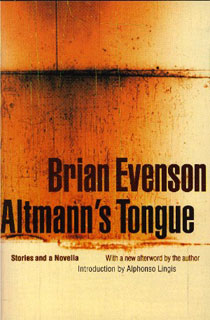
Knopf, 1996
Paperback 2004, Bison Books
Saturday, June 09, 2007
Work hours or the globalization of a parameter.
I take the recent publishing of a report by the International Labour Organization as an opportunity to develop what I consider to be a lack of debate about globalization.
For a lot of people, if not countries, the amount of work is a local, political decision. France for instance. The law (voted in 2002) fixing at 35 hours/week the amount of work is still seen as a proletarian victory; The result of a local fight which is now considered a right. An expression of the right of a nation to choose. Nevertheless this law has been since violently attacked as a major economic growth reducing factor by the present governement. It is the speech of the newly elected president M. Sarkozy: Others countries work more and make more. In the end what he wants to come back to is an auto-regulated system. Or more anglo-saxon if you wish.
 This system is lead by offers and needs, impacted very little by nationals regulations with the exterior (the WTO did its job) and a sense of competition. In other words, work time is a variable strongly coupled to the gobal economy which finds its regulation worldwide, taking care of the economical situations and specificities of every place. In the end, competition has kicked the power of desire our of the game. A country cannot decide anymore what shall happen within its border. Nevertheless, there is theoric, yet interesting trick. Let's pretend tomorrow all the world leaders agree to reduce the work hours in their countries by 2 hours, the economical relative positionnment of every country will likely stay the same, with a smaller production or an employment progression. (which latest was the prime argument of the law on work hours in France and which failed completely.) Nevertheless, if any country decides not to respect or sign such a convention, it takes an advantage in the competition, which sooner or later will spread on its surroundings and lead back to the previous state (without the reduction of 2 hours). Of course one could say that this logic is wrong since otherwise, the working hours would keep rising everywhere. The reply is simple: First, a week is not extensible. Second, it exists worldwide grounds or concepts which are to be considered non-alienable. The idea of Sunday for instance: a day of the week off, historically given by the place of religion.
This description I have made matches what could be called a precarious equilibrium. An aquilibrium which is reached only when all the participants agree, that cannot evolve if everybody doesn't evolve in the same direction at the same time. Finally, an equilibrium to which any disagreeing community could break and bring to a "lower" state, but not "higher" state. (The qualitative adjectives are to be understood from the point of view that a society giving more personal time to people is "higher". Point of view which can be highly debated but which main argument could be that a society giving less space to production (which act is contained as one of the 3 main acts of a a living organism (feed, produce, reproduce), and therefore, if reduced, brings a more "abstract" (away from basics) society which according to Wittgenstein point of view, is the way of human evolution.)))
So, - remember that I'm french here - what Edmund Phelps (Nobel Price of Economy 2006) forgets to precise when he says that work provides more to people than money but relationship, creativity and others values which I would consider to be gained from extra-work activities is that his point of view matches the anglo-saxon culture of work and life. It is a point of view about his culture. That is why I do not take any account to his reproaches toward Europe (and France noably) for not seeing such a perspective.
All this aside, it is a shame that no worldwide institute analyze the desires concerning the amount of work, feeding international meeting possibly toward the definition of new living standarts, at least theoricals. Something that people would desire.
For a lot of people, if not countries, the amount of work is a local, political decision. France for instance. The law (voted in 2002) fixing at 35 hours/week the amount of work is still seen as a proletarian victory; The result of a local fight which is now considered a right. An expression of the right of a nation to choose. Nevertheless this law has been since violently attacked as a major economic growth reducing factor by the present governement. It is the speech of the newly elected president M. Sarkozy: Others countries work more and make more. In the end what he wants to come back to is an auto-regulated system. Or more anglo-saxon if you wish.
 This system is lead by offers and needs, impacted very little by nationals regulations with the exterior (the WTO did its job) and a sense of competition. In other words, work time is a variable strongly coupled to the gobal economy which finds its regulation worldwide, taking care of the economical situations and specificities of every place. In the end, competition has kicked the power of desire our of the game. A country cannot decide anymore what shall happen within its border. Nevertheless, there is theoric, yet interesting trick. Let's pretend tomorrow all the world leaders agree to reduce the work hours in their countries by 2 hours, the economical relative positionnment of every country will likely stay the same, with a smaller production or an employment progression. (which latest was the prime argument of the law on work hours in France and which failed completely.) Nevertheless, if any country decides not to respect or sign such a convention, it takes an advantage in the competition, which sooner or later will spread on its surroundings and lead back to the previous state (without the reduction of 2 hours). Of course one could say that this logic is wrong since otherwise, the working hours would keep rising everywhere. The reply is simple: First, a week is not extensible. Second, it exists worldwide grounds or concepts which are to be considered non-alienable. The idea of Sunday for instance: a day of the week off, historically given by the place of religion.
This description I have made matches what could be called a precarious equilibrium. An aquilibrium which is reached only when all the participants agree, that cannot evolve if everybody doesn't evolve in the same direction at the same time. Finally, an equilibrium to which any disagreeing community could break and bring to a "lower" state, but not "higher" state. (The qualitative adjectives are to be understood from the point of view that a society giving more personal time to people is "higher". Point of view which can be highly debated but which main argument could be that a society giving less space to production (which act is contained as one of the 3 main acts of a a living organism (feed, produce, reproduce), and therefore, if reduced, brings a more "abstract" (away from basics) society which according to Wittgenstein point of view, is the way of human evolution.)))
So, - remember that I'm french here - what Edmund Phelps (Nobel Price of Economy 2006) forgets to precise when he says that work provides more to people than money but relationship, creativity and others values which I would consider to be gained from extra-work activities is that his point of view matches the anglo-saxon culture of work and life. It is a point of view about his culture. That is why I do not take any account to his reproaches toward Europe (and France noably) for not seeing such a perspective.
All this aside, it is a shame that no worldwide institute analyze the desires concerning the amount of work, feeding international meeting possibly toward the definition of new living standarts, at least theoricals. Something that people would desire.
Thursday, June 07, 2007
Vid Sampling
Just found this - Chris Cunnigham - clip. Looks like I'm 2 years late. It probably ranks to one of his best for sure. The more abstract parts, just playing with shapes and music are really impressive work.
Wednesday, June 06, 2007
Sollte ich nocheinmal ein Berliner sein?
 La température monte sur la scène internationale. Les journaux aguichent le début d'été comme des glaciers dans une rue balnéaire: "Guerre froide! Guerre froide!". Pointe de peur? Manichéisme réel ou lyrisme journalistique? Ce look de poste télé des années 50 nous revient comme une rediff. A son habitude, la série fait d'abord un carton aux USA avant d'être adaptée et transmise au monde.
Mais le monde a grandi, il a appri la diplomatie à plusieurs (même la Chine!). De la perte de l'étalon dollar à la naissance de l'entitié tiers-monde. En résultat, chacun se sent capable. Capable d'imposer ce qu'il veut sur des revendications bien choisies. La Corée du nord ne se lasse pas de titiller ses voisins. Le Japon pense à se réarmer, la Russie de se retirer des traités d'armement. L'Iran veut s'affirmer nucléairement, alors que chaque petit pays voisin profite du climat pour avancer en douce sur ses revendications, en faisant miroiter un retour de crise existentielle d'Israel. La Turquie doute de son laïcisme républicain. La différence christianisme-islam trace sur l'incrompréhension des bords aussi nets que celle entre les pays industrialisés et les autres. Chavez nationalise.
Des preuves de l'adaptation à ces règles est la seule chose à attendre de nos élus. Nicolas Sarkozy saura-t-il prendre le parti qu'il a annoncé dans sa campagne: l'indépendance (au moins d'intentions) aux états-unis? Pourquoi pas un retour au gaulisme vis à vis d l'OTAN, ou au moinsdonner un cap plus personnel à la strcture? Lui qui veut relancer l'Europe va aussi devoir prendre position vis à vis des pays associés aux plans de missiles d'interceptions de washington. Après tout, cet barrière ne serait là que pour protéger les U.S.A du merdier qu'ils ont précipités au moyen-orient à moins que ce ne soit plus général. Sans parler de l'invasion de l'Irak qui dans un tel contexte prend les couleurs d'une "baie des cochons" géante bien en retard sur son temps ne donnant de surcroît aucun moyen aux Etats-Unis de prouver dans un proche futur leur puissance (comme ils l'avaient fait après le Vietnam). Ce qui serait vraiment attardé, c'est un manque de tact, un souci personnel pour chaque intervenant de désir d'unitélarisme sur ses revendications personnelles. Et ce n'est pas l'Allemagne qui va faire ici le travail, Merkel se contentant d'assurer ses entrées d'énergie en provenance de la Russie.
Il semblerait que tout cela ne fasse refroidir personne, à l'image des initiateurs de Washington qui finissent tout débat en un diktat seul ou associé. Non, rien n'est parti pour refroidir et surtout pas la planète, deuxième sujet de ce G8, qui crie à l'entente des nations.
Subscribe to:
Posts (Atom)


